Of all the AI answer engines, Perplexity is the most open about where its answers come from. Nearly every response is built from a live web search, and nearly every claim has a numbered citation next to it.
For marketers, that makes Perplexity both the easiest AI platform to measure and one of the most responsive to optimization. When you publish or improve content, Perplexity can start citing it far sooner than a model that relies mainly on training data.
This guide explains how Perplexity chooses its sources, how to measure your visibility there, and what tends to move the numbers.
Why Perplexity Deserves Its Own Strategy
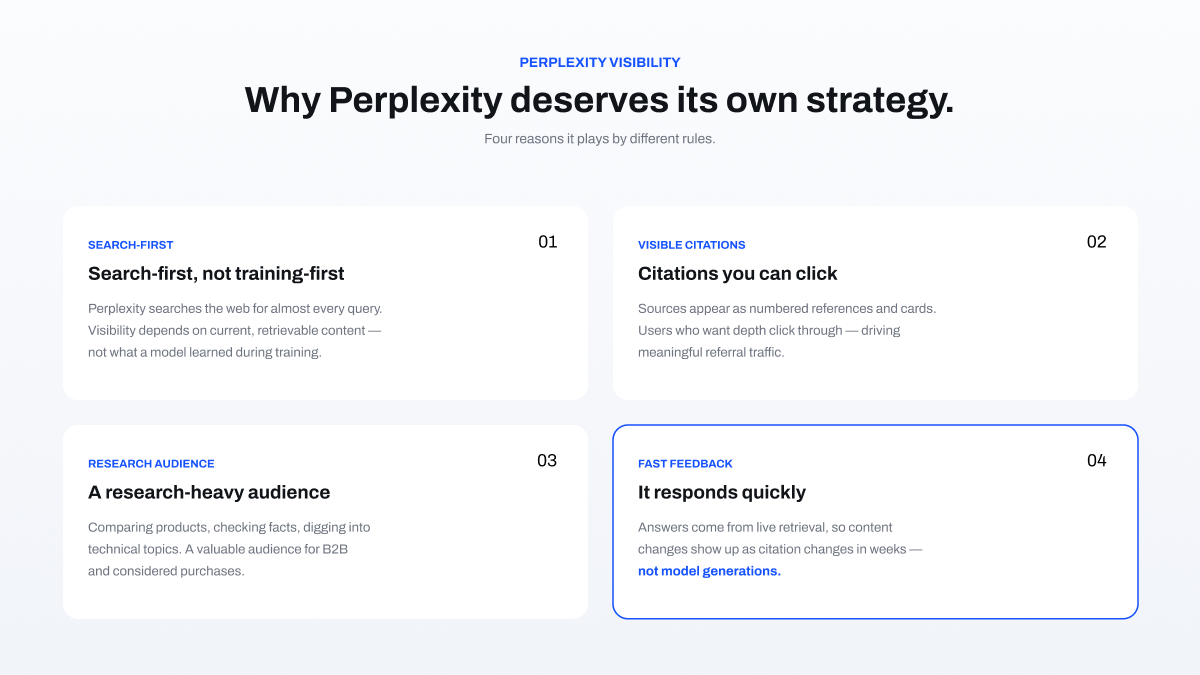
It's search-first. Perplexity searches the web for almost every query. Visibility depends largely on current, retrievable content rather than what a model learned during training.
Citations are visible and clickable. Sources appear as numbered references and source cards. Users who want depth click through, so Perplexity citations can drive meaningful referral traffic.
Its audience is research-heavy. Perplexity users tend to research: comparing products, checking facts, digging into technical topics. For B2B and considered purchases, that's a valuable audience.
It responds quickly. Because answers come from live retrieval, content changes can show up as citation changes in weeks, not model generations.
How Perplexity Chooses Its Sources
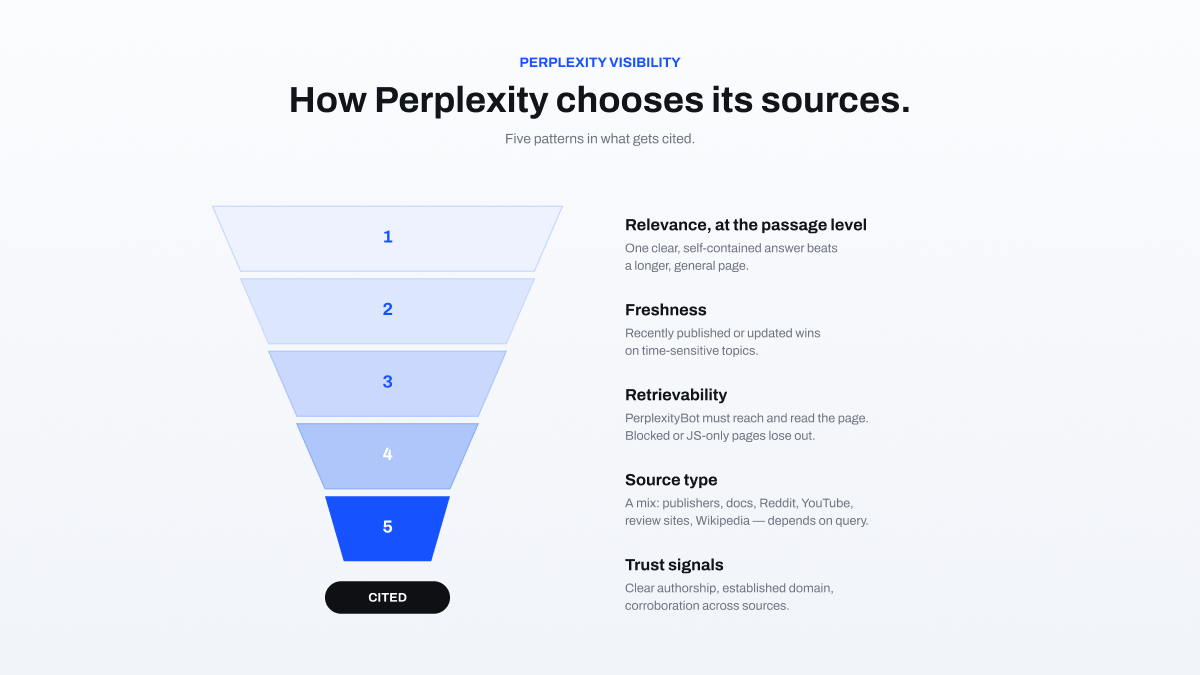
Perplexity doesn't publish its ranking formula, but its behavior shows consistent patterns:
1. Relevance at the passage level. Perplexity pulls specific passages that answer the question. A page with one clear, self-contained answer to the question often beats a longer, more general page.
2. Freshness. For anything time-sensitive (pricing, tools, "best of 2026," news), recently published or updated content gets a noticeable preference.
3. Retrievability. Its crawler (PerplexityBot) has to be able to reach and read the page. Pages blocked in robots.txt or by firewall rules, or that render content only through client-side JavaScript, are at a disadvantage.
4. Source type. Perplexity regularly cites a mix of publisher articles, documentation, Reddit and forum threads, YouTube, review sites, and Wikipedia. The mix depends on the query. For product comparisons, community discussions and review sites appear often.
5. Trust signals. Clear authorship, an established domain, and corroboration across sources all tend to help.
How to Measure Your Perplexity Visibility
1. Build a Perplexity prompt set
Perplexity users often ask longer, research-style questions. Include:
- "What are the best [category] tools for [use case] in 2026?"
- "How does [concept in your space] work?"
- "[Your brand] vs [competitor] for [use case]"
- "What does [specific process] cost?"
- Questions your best blog posts answer
2. Record four things per answer
- Brand mentioned? Is your brand named in the answer text?
- Domain cited? Does your site appear among the numbered sources?
- Which URL? Which specific page was cited?
- Competing sources: Which other domains were cited?
3. Calculate your core metrics
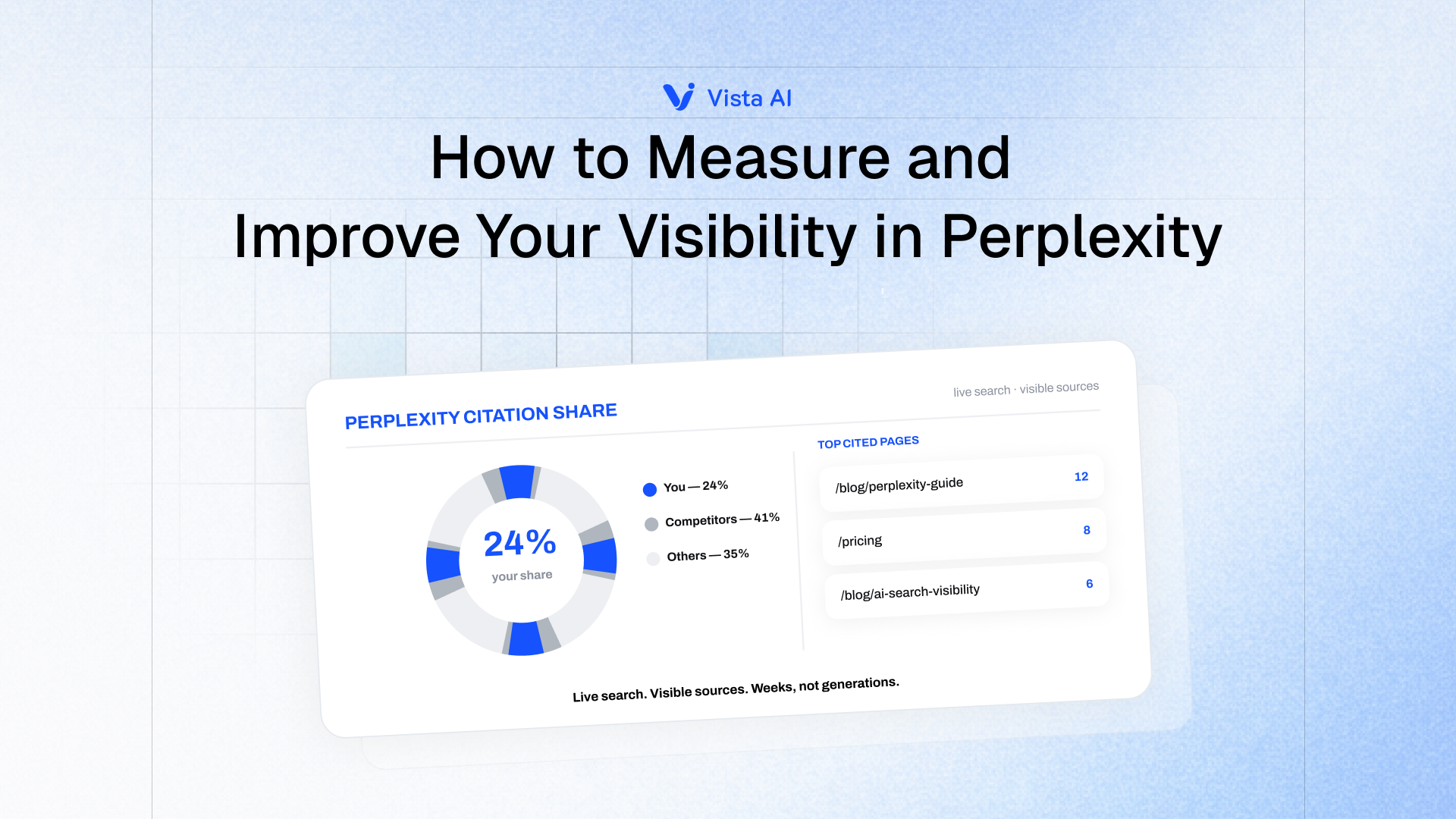
- Citation rate = answers citing your domain ÷ total answers
- Citation share = your citations ÷ all citations across the set
- Mention rate and share of voice against competitors
- Top-cited URLs, which tell you which content formats Perplexity values on your site
4. Check referral traffic
In GA4, filter session source for perplexity.ai and look at the landing pages. Pages receiving Perplexity traffic are being cited and clicked. Compare this with your prompt tracking to see which citations produce clicks.
5. Check crawler activity
Look in your server logs for PerplexityBot (indexing) and Perplexity-User (fetching pages live for a user's query). Frequent Perplexity-User hits on a URL are a strong sign it's being pulled into answers.
6. Repeat over time
Perplexity's answers vary between runs and change as new content is published. Track the same prompt set weekly to see trends.
How to Get Cited More in Perplexity
Make sure PerplexityBot can get in. Check robots.txt and your CDN or firewall bot rules. This is the most common, and the most fixable, reason for zero citations.
Lead each section with the answer. Under each heading, start with a 1–3 sentence answer that makes sense on its own, then expand. That's the passage Perplexity wants to quote.
Publish specific pages, not catch-all pages. One focused page per question ("How much does X cost?", "X vs Y for small teams") is more citable than one long page that covers everything.
Update and date time-sensitive content. Refresh "best tools," pricing, and statistics pages regularly, and show a clear "last updated" date.
Add original data. Original numbers, benchmarks, and survey findings give Perplexity something it can only cite from you.
Show up where Perplexity looks. For commercial topics, it often cites Reddit discussions, review sites, and YouTube. Real, helpful participation in those places, and accurate profiles on review platforms, widens the set of sources that can mention you.
Use structure. Tables, numbered steps, and FAQ sections are easy to pull passages from and match comparison and how-to queries well.
Common Perplexity Visibility Problems
| Symptom | Likely cause | Fix |
|---|---|---|
| Never cited, even for branded queries | Crawler blocked or content not indexed | Check robots.txt, firewall, rendering |
| Cited, but brand not named | Content used without attribution | Add original data, named frameworks, clear brand attribution |
| Competitors cited for your core topic | They have a more specific, fresher page | Publish a focused, up-to-date page on that exact question |
| Old pages cited instead of new ones | Outdated pages still rank well | Update or redirect outdated pages |
| Cited by others with incorrect info about you | Third-party pages out of date | Request corrections and publish clear first-party facts |
Tracking Perplexity With Vista AI
Vista AI tracks your prompt set in Perplexity on a schedule alongside ChatGPT, Gemini, Claude, Copilot, and Google AI Overviews. It records every cited URL, your citation share against competitors, and how visibility changes over time, so you can see which content changes actually move your Perplexity citations.