Ads are no longer a hypothetical for ChatGPT. OpenAI started testing ads with logged-in adult users in the U.S. in February 2026, opened its self-serve Ads Manager to U.S. businesses by May, and expanded ChatGPT ads to additional international markets throughout 2026. In under 200 days, OpenAI said ChatGPT Ads had reached a $1 billion annualized revenue run rate. This changes the conversation every brand needs to have about AI visibility, because for the first time there are now two separate ways to show up in a ChatGPT response: pay for the space below the answer, or earn a place inside it.
Those two things are not the same, and confusing them can lead marketing teams to misallocate their budgets. This guide breaks down exactly how ChatGPT ads work, what they cost, and more importantly what they do and don't change about the strategy that actually gets a brand recommended by name inside an AI answer.
What ChatGPT Ads Actually Are
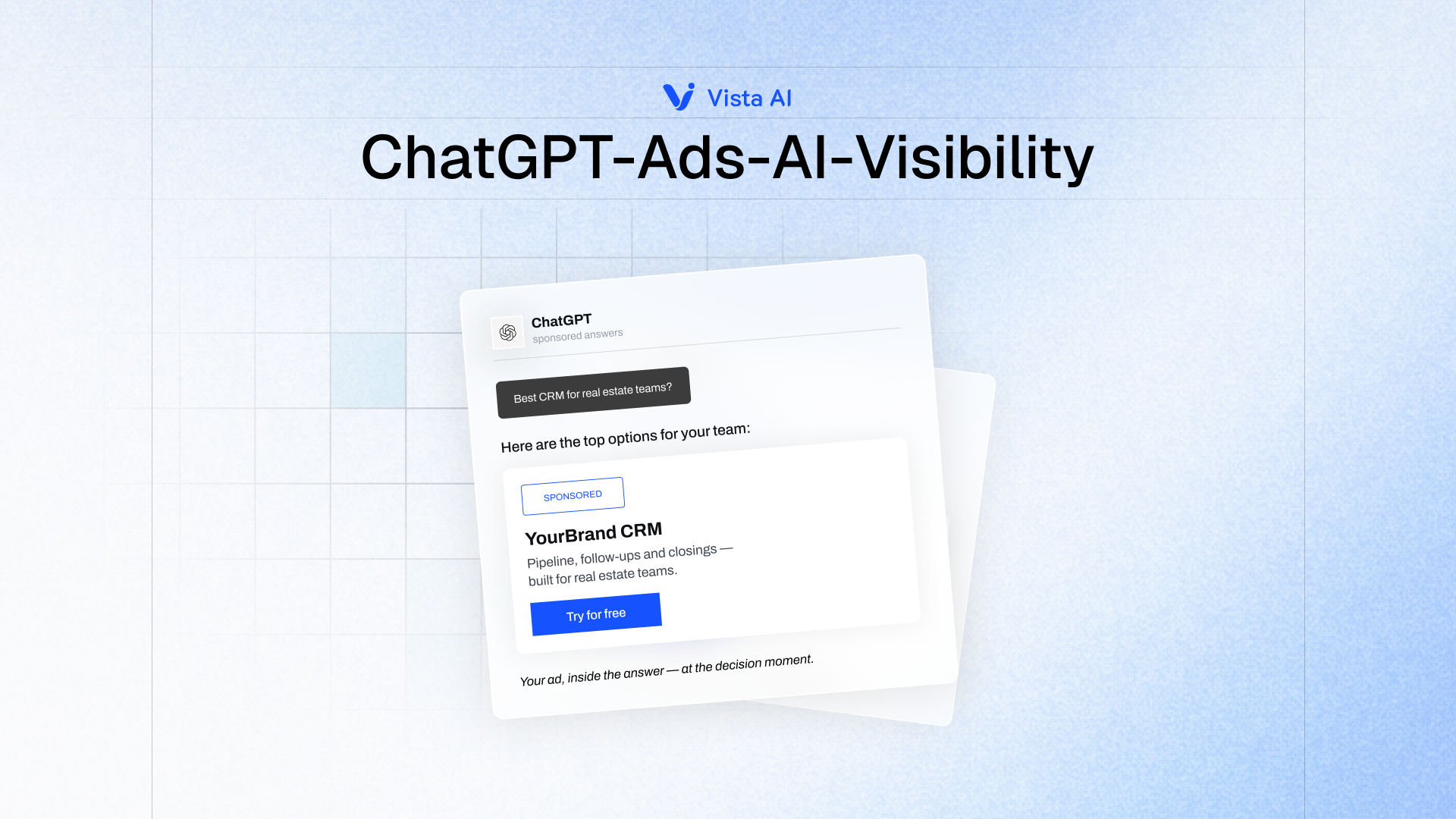
A ChatGPT ad is a clearly labeled "Sponsored" card that appears below the model's response, visually separated from the answer itself. For queries with obvious commercial intent someone asking about running shoes, or CRM software — the sponsored placement can include a product card similar to what you'd see in Google Shopping results. Targeting is contextual: OpenAI says its ad system can consider the context and intent of the current conversation, along with other signals such as the ad's landing page, advertiser-provided information and targeting selections. Advertisers do not receive users' chats, chat history, memories or personal details; they receive aggregated performance data such as impressions and clicks. Advertisers never see what a user actually typed they receive aggregate performance numbers like impressions and clicks, the same way most display advertising has worked for two decades.
Not every ChatGPT user sees ads. Ads may appear for eligible logged-in adult users on the Free and Go plans. The Plus, Pro, Business, Enterprise and Education tiers stay ad-free by design. That's a meaningful detail for B2B brands in particular: your highest-intent, highest-paying prospects the people on a Business or Enterprise ChatGPT seat will never see a ChatGPT ad, from you or anyone else. ChatGPT Ads are not available on those paid tiers, so brands cannot use the current ChatGPT Ads product to reach those users through sponsored placements. Organic visibility therefore remains an important way for brands to be discovered in ChatGPT answers.
How Fast This Moved
| Date | Milestone |
|---|---|
| Jan 16, 2026 | OpenAI's Fidji Simo publishes the company's advertising principles and confirms ads are coming |
| Feb 9, 2026 | Ads begin appearing for Free and Go tier users in the U.S., starting with select launch partners |
| May 5, 2026 | Self-serve ChatGPT Ads Manager opens to U.S. businesses; the original six-figure minimum spend requirement is progressively cut and then removed for self-serve advertisers |
| Aug 2026 | Ads expand to the UK, Japan, South Korea, Mexico and Brazil |
| ~200 days post-launch | ChatGPT Ads reportedly reach a $1 billion annualized revenue run rate |
Pricing has already shifted once. Ads launched at roughly 60 CPM, but as that eroded toward 25 in some categories, OpenAI moved toward a cost-per-click model, with advertisers now able to bid roughly $3 - $5 per click. That's a fast pivot for a six-month-old ad product, and it's a signal worth remembering: this platform is still being tuned in public, and today's pricing and targeting rules are not guaranteed to be next quarter's.
The Five Principles OpenAI Says It Won't Break
When Fidji Simo announced ChatGPT's advertising plans, she framed them around five stated principles: mission alignment (ads fund broader access to the free tier), answer independence, conversation privacy, choice and control, and long-term value over engagement-maximizing design. OpenAI has also said it won't place ads near sensitive categories like health, mental health or political topics.
The one that actually matters for a marketing team building an AI visibility strategy is answer independence. OpenAI has been explicit that advertising does not influence the answer ChatGPT gives the sponsored card is a separate element below a response that the model generates independently, based on what it judges to be useful and relevant. Whether every user believes that claim is a separate question (some coverage of the launch has openly questioned how verifiable it is from the outside), but it's the architectural line OpenAI has drawn, and it's the one that defines what advertising can and can't buy you.
The Distinction That Actually Matters: A Sponsored Card Is Not a Citation
This is the part worth sitting with. A ChatGPT ad buys you a labeled box below an answer. It does not buy you a mention inside the answer, a place in the model's reasoning, or a recommendation in the user's own words. If someone asks ChatGPT "what's the best project management tool for a distributed team" and your brand isn't part of how the model understands that category, no amount of ad spend puts you in that sentence. You can appear next to the answer. You cannot become the answer.
That's precisely the placement answer engine optimization has always targeted, and OpenAI's own principles confirm that ad spend was never going to be a shortcut around it. The two channels now sit side by side, and they behave completely differently:
| Sponsored placement (ChatGPT Ads) | Organic citation (AEO) | |
|---|---|---|
| How you get it | Bid $3–$5 per click, or pay CPM | Content the model judges relevant, trustworthy and citation-worthy |
| Who sees it | Free and Go tier users only | Every ChatGPT user, on every tier |
| Can a competitor outbid you for it? | Yes | No — it's earned, not auctioned |
| What it builds over time | Traffic while the campaign runs | Durable presence in how the model describes your category |
| How you measure it | Impressions, clicks, CPC/CPM | Citation frequency, share of model, position within the answer |
Neither row is "better" in the abstract they answer different questions. Ads can put your name in front of someone mid-conversation, which is a real and new distribution channel. But they expire the moment the campaign budget does, and they never reach the paid-tier users your business likely cares about most. Citations can have a longer-lasting effect: a well-structured, well-sourced page that earns citations can continue to appear in AI answers as long as it remains relevant and is selected by the underlying system.
What This Means for Your AI Visibility Strategy
Treat paid and organic as two separate budget lines, not one. The instinct to fold ChatGPT ad spend into your existing "AI visibility" budget will blur a distinction your team needs to keep sharp. Ad spend buys short-term reach to a specific, ad-eligible slice of ChatGPT's audience. AEO investment builds the thing that determines whether the model recommends you at all, for everyone. Both can be worth doing. They are not substitutes for each other.
"Share of model" is becoming the metric that matters for the placement you can't buy. As ads have rolled out, a parallel term has caught on in AI visibility circles: share of model, the AI-era equivalent of share of voice, measuring how often your brand shows up in AI-generated answers relative to competitors for the same category of question. That's exactly what tools like Vista's AI Rank Tracker and brand visibility dashboard are built to track not clicks on a sponsored card, but whether you're the brand ChatGPT actually names.
Run the math on minimum spend before you pilot. Self-serve access removed OpenAI's original six-figure minimum, but meaningful CPC campaigns still require a real budget to generate statistically useful data, and pricing is visibly still being adjusted by OpenAI in response to advertiser behavior. If you're a smaller brand deciding where the next marketing dollar goes, that's worth weighing against the fact that AEO content, once it earns a citation, keeps working without a recurring media spend.
A sponsored card can still be useful just not as a replacement for citation-worthy content. If someone is already mid-conversation about your category on the free tier, a well-targeted ad is a legitimate way to get in front of them at a relevant moment. Use it as a complement to your content strategy, particularly for bottom-of-funnel, high-commercial-intent queries where Free/Go tier reach genuinely overlaps with your buyers. Just don't mistake the campaign report for a visibility strategy.
What to Do Now
Start by establishing your current baseline before you decide whether to touch ChatGPT Ads at all. Use Vista's AI citation tracking to find out how often and how favorably your brand already shows up in ChatGPT, Claude, Perplexity and Google AI Overviews for the questions your buyers actually ask. You can't evaluate whether a $3–$5-per-click pilot is worth running until you know what you're already getting for free.
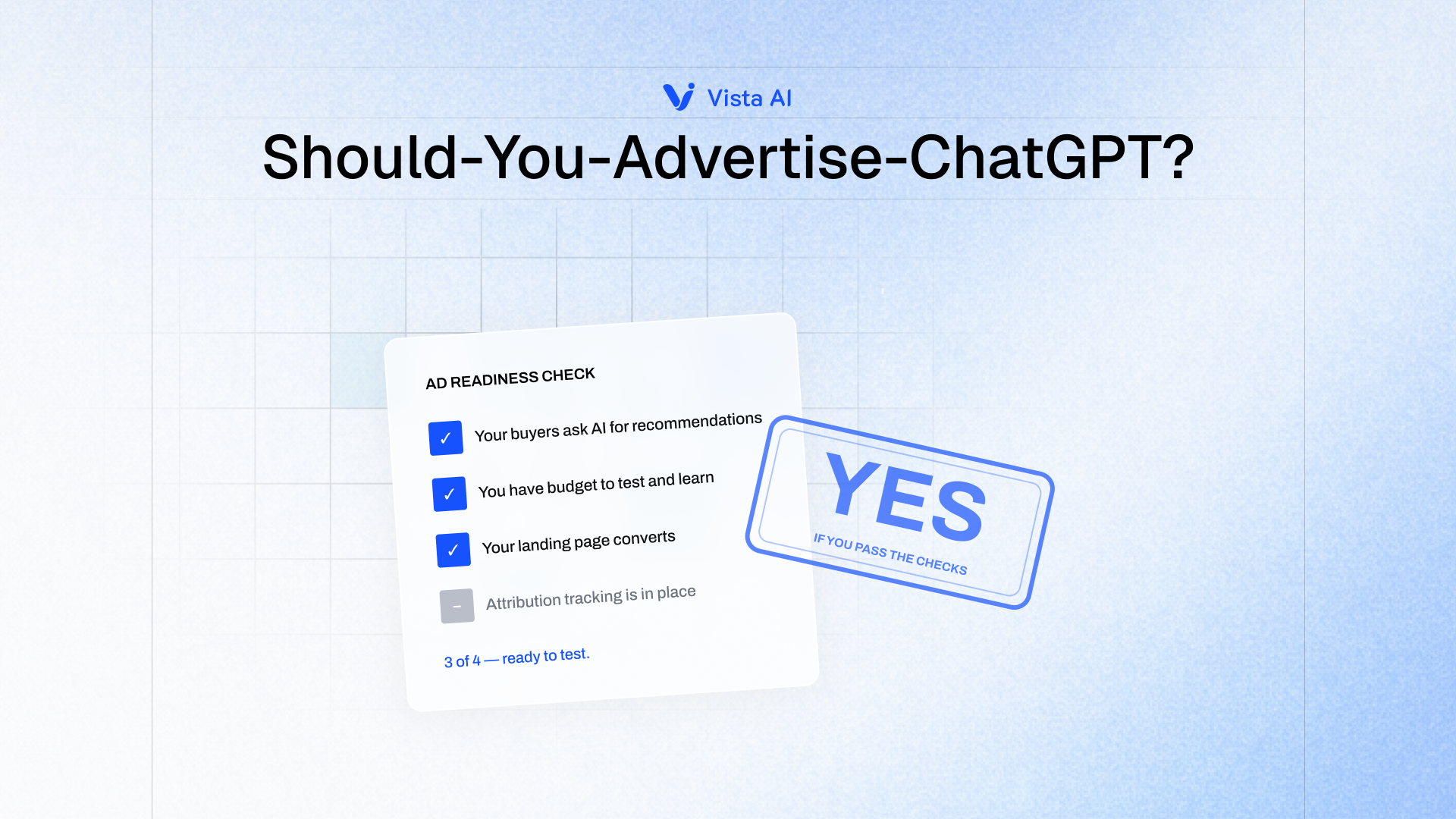
Next, separate the decision into two questions instead of one. Question one: is there a genuine advertising opportunity here for bottom-funnel, high-intent queries where your paying customers' peers are likely to be on a Free or Go account? For some categories consumer products, low-cost SaaS, anything with a large free-tier audience that answer may be yes. Question two, independent of the first: is your content actually structured to earn a citation for the questions people ask before they're ready to click an ad at all? That second question is where most brands still have real, unclaimed ground to cover, and it's the one that keeps paying off after any given ad campaign ends. Vista's pricing starts at $99/month for teams that want to track both sides of that equation without guessing.
Finally, watch this space rather than treating today's rules as fixed. OpenAI has already changed its pricing model and minimum spend once inside the first six months of launch, and it's actively expanding country by country. What's true about targeting, cost and eligibility in Q4 2026 may not hold in Q2 2027. Build your measurement now so you can see the shift coming, whichever direction it moves.
Conclusion: Ads Buy Attention, Citations Buy Trust
ChatGPT ads are a real distribution channel, and ignoring them outright would be as much of a mistake as over-indexing on them. But OpenAI built a hard line into the product on purpose: advertisers can buy a labeled box below the answer, and nothing else. The recommendation itself the sentence where ChatGPT tells someone which product, tool or company to actually use is still earned entirely through the same mechanism it always was: content the model finds specific, trustworthy and worth citing. That's the part a media budget can't shortcut, and it's the part worth investing in regardless of what OpenAI does with pricing next quarter.
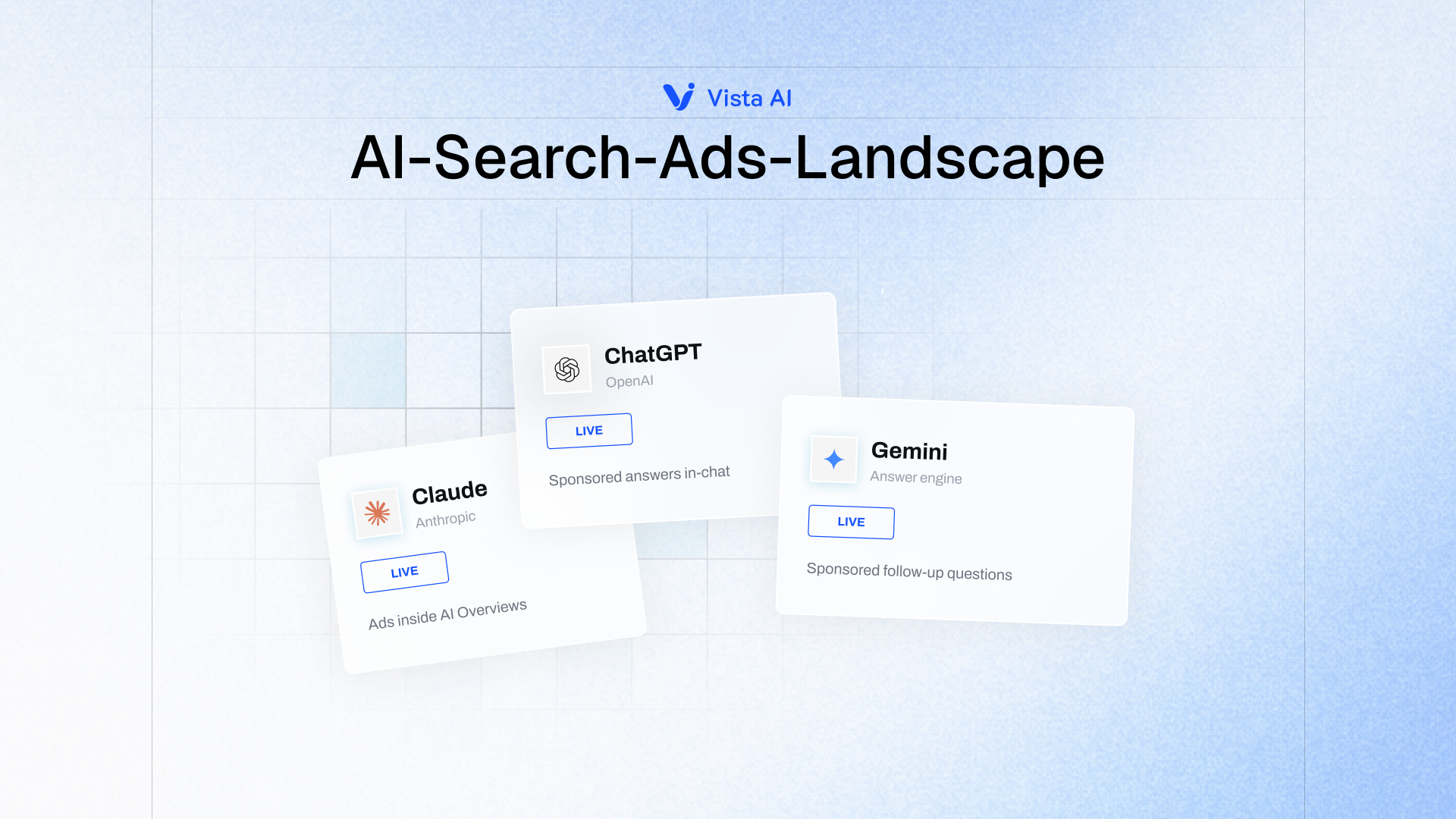
If you decide a paid pilot is worth testing, two follow-up questions are worth working through before you set a budget: how much ChatGPT ads actually cost right now, and whether your brand is even a good fit to advertise once you account for eligibility rules and tier reach. And since ChatGPT is only one piece of the AI search landscape, see how Perplexity, Google and Microsoft are handling ads very differently before assuming what's true here generalizes everywhere.